


Many people wonder, “Do I need a license to teach yoga?” Well, it’s a fair and important question, especially when you’re just starting out. The yoga world is full of different terms like license, certification, and registration, and it’s easy to get confused about what’s actually needed to teach.
Yoga Instructor License
Usually, a license means an official permission slip from the government, like the one doctors or drivers require to do their jobs. But in the field of yoga, things work a little differently. There’s no government office handing out yoga teaching licenses, and no legal rule saying you need one to lead a class. Instead, the path to becoming a yoga teacher is shaped more by training, experience, and trust.
In this blog, we’ll share what a yoga instructor license means, how to become a licensed yoga instructor, and more.
What is a Yoga Instructor License?
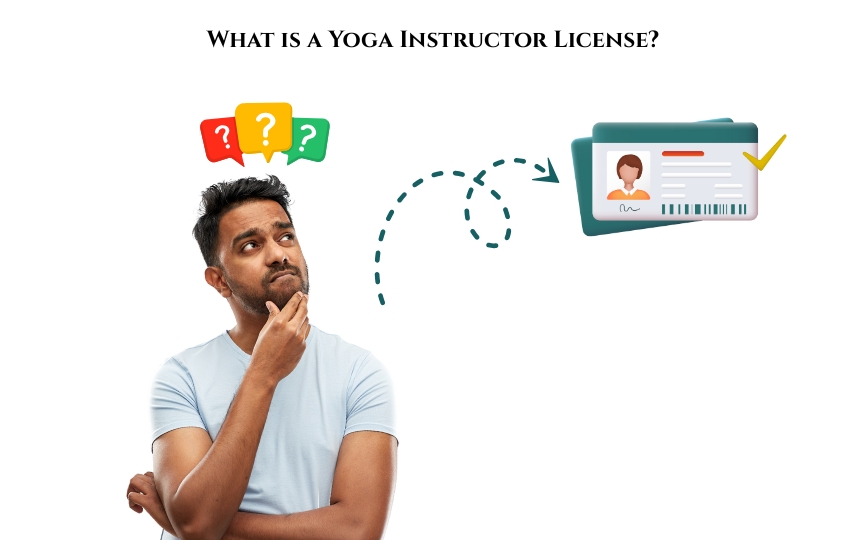
You’ve probably heard people say things like, “I’m a licensed yoga instructor,” but what does that mean? Let’s clear it up, because in yoga, terms like license, certification, and registration are often used interchangeably even though they mean different things.
So, here’s a simple breakdown –
- License – A license is an official permit issued by the government that legally allows someone to do a certain job, like being a doctor, lawyer, or driver. But in yoga, there’s no government license required to teach. This means there’s no yoga license you can apply for or need to renew through your local or national government.
- Certification – A certification is what you get after finishing a yoga teacher training program, most commonly a 200-hour teacher training. This shows that you’ve learned the basics of teaching yoga from poses and alignment to breathing, anatomy, and yoga philosophy. It’s proof of your training period, and that’s what most studios look for before they hire you.
- Registration – A registration is when you officially list your yoga teacher training certificate with a yoga organization like Yoga Alliance. If you register with them, you get the title RYT (Registered Yoga Teacher). This adds extra credibility and can open up more teaching opportunities, especially at bigger studios or retreats.
Do You Need a License to Be a Yoga Instructor?
No, you don’t need a license to be a yoga instructor, at least not in most countries.
In the USA, UK, and India, there’s no official government license needed to teach yoga. That means you won’t be breaking any laws by leading a class without having a license. But here’s the catch: most yoga studios and students expect you to have proper training and a certificate from a trusted and registered yoga school. So while it’s not legally required, getting certified shows you’ve put in the work, understand the practice, and are ready to teach safely and responsibly.
How to Become a Licensed Yoga Instructor?
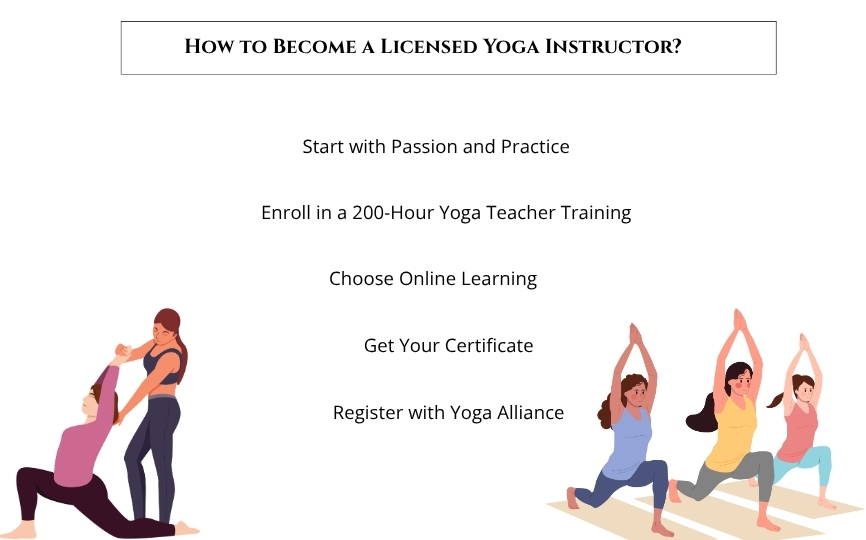
If you’re wondering how to become a yoga instructor, here’s a simple step-by-step path to guide you –
1. Start with Passion and Practice
Before teaching, fall in love with your own yoga journey. Make sure to pursue your personal yoga practice regularly and explore different yoga styles to find what speaks to you.
2. Enroll in a 200-Hour Yoga Teacher Training (YTT)
This is the most important step. You must choose a course that covers yoga philosophy, anatomy, teaching techniques, and practice teaching. Make sure it’s with a Yoga Alliance-registered school, as it will give you a credible certification.
3. Choose Online Learning
These days, numerous trusted schools offer flexible, well-structured, and Yoga Alliance-approved online YTT programs. These are perfect if you prefer to learn from home!
4. Get Your Certificate
After completing your training, you’ll receive a certificate that proves you’re ready to teach. This is what most people mean when they say “licensed yoga instructor.”
5. Register with Yoga Alliance
Do you want to make your profile authentic? You can sign up as an RYT (Registered Yoga Teacher) with Yoga Alliance. Though it’s not mandatory, but many studios prefer it, and it gives you access to extra resources, continuing education, academic credit, and credibility.
How to Get a Yoga Instructor License?
If you’re searching for how to get a yoga instructor license, here’s how to do it in a smart and simple way
1. Pick the Right Yoga School
Not all yoga schools are the same. You can choose the one that’s registered with Yoga Alliance, has good reviews, and is led by experienced teachers with whom you can connect easily. The right school makes a huge difference in your learning experience.
2. Be Aware of the Curriculum
A solid YTT (Yoga Teacher Training) covers more than the yoga poses. You’ll study about –
- Yoga philosophy and yoga history – Where you’ll know why we do what we do in yoga.
- Body basics – You’ll get an understanding of body anatomy and movement.
- Teaching skills – You’ll understand how to guide others safely and confidently and conduct yoga instruction.
3. Complete the Training and Get Certified
After finishing the course, you’ll get a certification as a yoga teacher, and this is what most studios look for when hiring.
4. Register Yourself as per Yoga Alliance Standards
You can take your certification one step further and register with Yoga Alliance. This adds an extra layer of credibility and helps you stand out as a serious and committed teacher.
Where Can Licensed Yoga Instructors Teach?
Once you’re certified, a world of teaching opportunities opens up! Here’s where you can share your personal practice and how your certification helps you shine –
- Yoga Studios
Most yoga studios prefer certified yoga teachers, especially those who are registered with the Yoga Alliance. It shows you’ve been trained well and take your teaching practice seriously. - Gyms and Fitness Centers
Gyms often look for certified yoga instructors so that the yoga classes conducted are safe, structured, and beginner-friendly. Your certification will help you stand out from fitness trainers who teach yoga without formal training. - Online Classes
Online classes are a blessing as you can teach from your living room to someone across the globe as well. A yoga teacher certificate helps students trust you more, especially if they’re learning online. - Private Sessions
Do you want to work one-on-one? Well, your certification also gives clients some confidence that they’re learning from someone who understands their body and needs well. - Retreats and Wellness Events
Are you dreaming of teaching at a beach retreat or mountain getaway? Well, most retreat hosts require certified teachers for quality and safety. - Schools and Community Centers
Even schools prefer those yoga teachers who are formally certified because when you’re working with kids, teens, or community groups, your certification shows you’re trained to guide with care and responsibility.
Bonus: Tips for Choosing the Right Yoga Certification Program
Not every yoga teacher training program is the same. Here are a few tips to help you choose a YTT program that truly supports your journey and helps you grow as a teacher –
1. Look for Proper Accreditation
You must always choose a program that is accredited by trusted organizations like Yoga Alliance. This makes sure that the yoga training meets global standards, so your certificate is accepted by yoga studios and employers all around the world.
2. Decide Between Online and In-Person Learning
You can think about what works best for your schedule and learning style. If you prefer flexibility and learning at your own pace, then online courses are a great option. If you enjoy group energy, face-to-face guidance, and hands-on practice, then an in-person course will suit you better.
3. Read Reviews and Alumni Testimonials
Before you commit to a yoga certification program, take time to read honest reviews, stories from past students, and find out if they felt supported, inspired, and well-prepared to teach after finishing the yoga program. Their feedback can help you choose an online program that truly delivers its promises.
Final Thoughts
So, what’s the real deal? You don’t need an official license to be a yoga instructor, but you do need the right training to teach safely, confidently, and with heart.
Getting certified through a trusted program isn’t just about a piece of paper; it’s also about learning how to guide others, protect your students from injury, and understand the yoga practice from the inside out.
Your dream of leading group classes in a studio, on a beach, or from your living room screen can happen with one solid step: Good Education.
So if your heart is set on teaching yoga, don’t wait. Find yourself a program that speaks to you, practice yoga more often for a life changing experience, and begin your journey for professional development and to become the kind of teacher the world actually needs.