

Teaching a yoga class isn’t just about knowing the poses; it’s also about guiding others through yoga in a better way. That’s why the journey to becoming a yoga instructor begins with something more than passion; it actually begins with preparation!
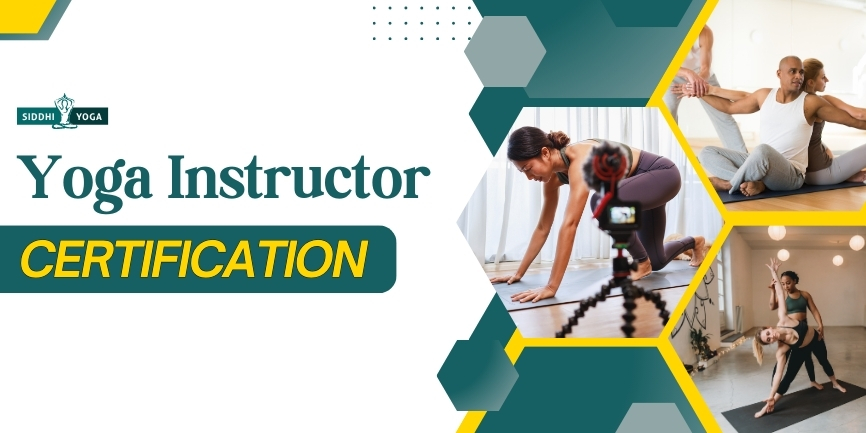
Yoga Instructor Certification
You might wonder if, do you need a certification to be a yoga instructor or not. The simple answer is if you want to teach yoga with skill, confidence, and care, yes, you do need a proper certification!
A yoga certification isn’t a formality; it’s your strong foundation. It gives you the tools to teach safely, support your students, and share yoga in a way that’s thoughtful and impactful. Choosing to train as a yoga teacher shows commitment to the craft. It shows that you’re serious about honoring your yoga practice and guiding others with responsibility and intention.
And if you’re asking, what certification do you need to be a yoga instructor? Then, you should know that most people begin with a 200-hour Yoga Teacher Training (YTT). It’s where you build the basics: how the body moves, how to plan a class, how to teach different types of students, and how to grow your voice as a teacher.
So, let’s get started to know what yoga certification is, types of YA certifications, types of yoga styles, and more –
Breaking Down the Yoga Jargon(s) –
Yoga is all about calming the mind, but let’s be honest, the terms around becoming a yoga instructor can feel like a confusion. Be it with YTT? RYT? Certification? Or Accreditation. So, don’t worry! Let’s untangle it all –
- YTT = Yoga Teacher Training
This is the course you take to become a yoga teacher. The most common one is the 200-hour yoga instructor certification teacher training. It’s where you learn everything from yoga asanas and breathing to how to create a class experience and teach it well.
- Certification = You’re an Official Yoga Teacher Now
Once you finish your training, you’ll receive a yoga certificate from your school, which means you have completed the course and you’re now a certified yoga instructor!
- RYT = Registered Yoga Teacher
This is the step that comes after you’re certified. You can choose to “register” yourself in their directory because that’s when you officially become an RYT (Registered Yoga Teacher). It’s optional, but many studios prefer RYTs.
- Accreditation = Quality Check
When a school is accredited, it means a trusted organization (like Yoga Alliance) has reviewed and approved their training. So, if you want your certificate to be recognized on a global level, then pick an accredited yoga instructor certification program.
In short?
You train in YTT.
You earn a certification.
You can choose to register as an RYT.
And the best schools? They’re accredited.
Types of Yoga Alliance Certifications
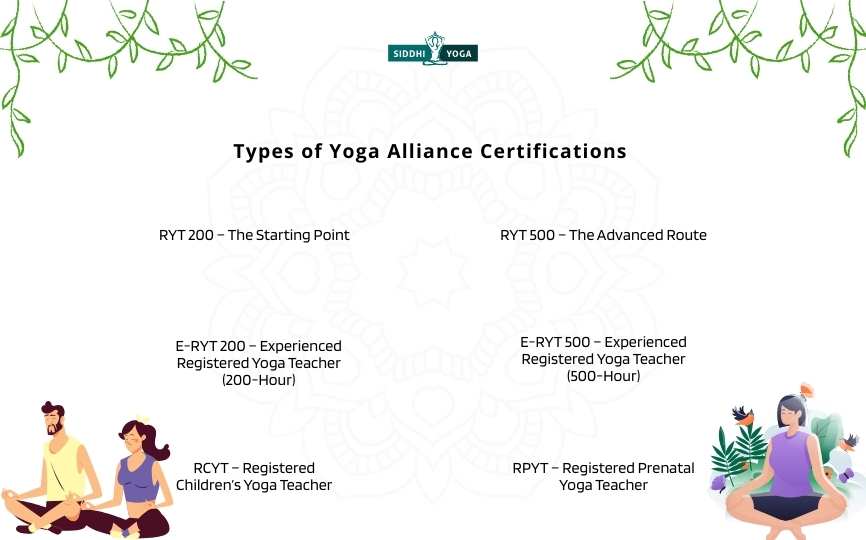
Here is your little guide to understanding the different Yoga Alliance credentials and how to qualify for them.
- RYT 200 – The Starting Point
- To get started, you’ll need to complete a 200-hour yoga teacher training program from a Registered Yoga School.
- This is the first step for anyone beginning their journey as a yoga teacher.
- The entire training must be done at one school, as you can’t combine hours from different programs.
- No prior teaching experience is needed, but your dedication and love for yoga only.
- RYT 500 – The Advanced Route
There are two paths to qualify in this case –
- You can complete a 500-hour yoga teacher training with a Registered Yoga School (RYS 500)
- Or combine a 200-hour training with a 300-hour advanced training from an RYS 300 or RYS 500.
- To qualify, you’ll also need to have at least 100 hours of teaching experience after your training is complete.
- E-RYT 200 – Experienced Registered Yoga Teacher (200-Hour)
- First, you’ll need to complete a 200-hour yoga teacher training with a Registered Yoga School.
- You should also have at least two years of teaching experience under your belt.
- Plus, you’ll need to have 1,000 hours of teaching experience after finishing your training.
- E-RYT 500 – Experienced Registered Yoga Teacher (500-Hour)
There are two ways to qualify –
- You’ll need to complete your 500-hour yoga teacher training and have at least four years of teaching experience.
- A log of 2,000 teaching hours is required—1,500 hours after your RYS 200 or 500 training, and 500 hours after your RYS 300 or 500.
- Once certified, you’ll be eligible to lead 200, 300, and 500-hour trainings and offer Continuing Education to other yoga teachers.
- RCYT – Registered Children’s Yoga Teacher
- You’ll need to complete a 200-hour yoga teacher training with a Registered Yoga School.
- You should also complete a 95-hour Children’s Yoga Teacher Training with a Registered Children’s Yoga School (RCYS).
- After that, you’ll need to log 30 hours of teaching experience specifically in children’s yoga, after finishing your RCYS training.
- You can earn your RCYT and RYT credentials in any order, but the RYT must be completed first for your RCYT to be valid.
- RPYT – Registered Prenatal Yoga Teacher
- You’ll need to have completed a 200-hour yoga teacher training with a Registered Yoga School.
- You should also complete an 85-hour Prenatal Yoga Teacher Training from a Registered Prenatal Yoga School (RPYS).
- After your RPYS training, you’ll need to log 30 hours of teaching experience specifically in prenatal yoga.
Choose Your Yoga Style: Not All Certifications Are the Same
From grounding flows to floating air poses, every yoga style has something unique to offer. Once you’ve completed your foundational training, there’s a whole world of specialty certifications waiting to be experienced. Here are some of the popular ones –
- Hot Yoga Instructor Certification
This one is perfect if you do well in high-energy and heated environments. This certification trains you to lead strong, detoxifying classes that build stamina and focus. - Hatha Yoga Instructor Certification
It’s a classic and steady style focused on breath, balance, and alignment. This is best for you if you’re drawn to a calm, structured, and meditative teaching approach. - Vinyasa Flow Yoga Instructor Certification
If movement, rhythm, and creativity are your thing, then Vinyasa will feel like home to you. This yoga style trains you to lead smooth, breath-connected flows that energize and inspire your mind and body. - Aerial Yoga Instructor Certification
You can take your personal practice to new heights literally, with this yoga style. Aerial yoga uses silk hammocks to support and raise students in the air through playful and strength-building sequences. - Multi-Style Yoga Certification
You are unable to pick just one style? Well, then multi-style training gives you an exposure to several approaches (like Hatha, Vinyasa, Yin, etc.) so that you can teach a variety of styles and find out your personal mix of styles. - Postnatal & Prenatal Yoga Instructor Certification
This nurturing certification helps you guide women through all the stages of pregnancy and the recovery period after that. You’ll learn how to adapt yoga safely and supportively for new and expecting moms.
Finding Your Yoga Training Mode

Yoga doesn’t have to start in a studio; sometimes, your mat and your laptop are all you need. These days, becoming a certified yoga teacher doesn’t always mean packing a bag and heading to a yoga class. Thanks to the rise of online programs, you now have the freedom to choose how and where you want to train.
- Online yoga instructor certification is perfect if you want to learn at your own pace, from anywhere in the world. It’s good for people with busy schedules, family commitments, or a love for flexibility. You can replay classes, pause to take notes, and still learn from amazing teachers without leaving home.
- On the other side, in-person training gives you real-time energy, hands-on guidance, and connection with the yoga community. If you’re someone who learns better through live interaction or group energy, this route might feel more fulfilling to you.
Your training should feel like a true shift because whichever mode you choose, the best yoga instructor certification is the one that fits your rhythm, your life, and your love for learning.
What’s the Cost of Becoming a Certified Yoga Instructor?
Getting your yoga instructor certification is an investment, not just in money, but in yourself as well. Let’s break down what to expect when it comes to costs –
- Realistic Course Fees
Most yoga instructor certification courses fall somewhere between $2,000 to $5,000 for a full 200-hour program. Some shorter or specialty courses might be less, but quality training takes time and expert guidance, so be prepared to invest accordingly.
- Free Options vs Premium Ones
You might spot many free yoga instructor certification offers online, but the truth is, free courses cover only the basics or share limited training.
While premium courses can be pricy because they come with live teachers, comprehensive materials, unlimited access, easy payment plans, tips on the business side of teaching, different payment options to fit your budget, and a yoga teacher training certificate that holds weight in the yoga community.
What Does a Good Certification Teach?
A yoga teacher certification teaches you much more than just the poses. Here’s what you’ll learn beyond the asanas –
- Understanding Anatomy and Physiology
You’ll study how the body works to help keep your students safe and avoid injuries during the yoga practice. - Learning Teaching Techniques and Verbal Cues
You’ll find out how to explain yoga poses clearly and guide the students smoothly through their personal yoga practice. - Know About Yoga Philosophy, Yoga History, and Ethics
You’ll gain insight into yoga’s detailed meaning and learn how to be an ethical and respectful teacher. - Developing Class Sequencing Skills
You’ll learn how to create balanced and effective yoga classes that flow naturally. - Building Confidence and Communication Skills
Yoga training helps you confidently lead classes and connect with your students. - Mastering Modifications and Adjustments
You can find out different ways to safely modify poses as per different bodies and skill levels. - Practicing Real Teaching Sessions
You’ll get hands-on experience in teaching others and receiving feedback to improve your skills.
The Road to Certification: Your 5-Step Path
How to become a yoga instructor doesn’t have to be confusing. Here’s a simple 5-step roadmap to guide you from curious yogi to a confident yoga teacher –
Step 1: Find Your Why
Before you start, think about why you want to teach yoga. Is it to help others? Or improve your practice, or build a yoga career? Knowing your purpose will keep you motivated to begin.
Step 2: Choose the Right Training
You must look for a yoga instructor certification course that fits your yoga style, budget, and schedule. Decide if you want to learn online or in person, and check if the course is respected and accredited.
Step 3: Start Learning
During your course, you should stay open and curious. You must have your own personal practice regularly, ask questions, and soak up all the knowledge from poses to philosophy and teaching skills.
Step 4: Get Teaching Experience
After training, you can start practicing by teaching yoga to friends, family, or small groups. The more you teach, the better you’ll get and the more confident you’ll feel.
Step 5: Keep Growing and Register
Once you’ve completed your yoga certification and gained some teaching hours, register yourself with a recognized organization like Yoga Alliance. You can further keep learning with workshops and classes to grow as a teacher.
What to Do Before, During, and After Your Course?
Before: It’s better to prepare your mind and body for learning. Set realistic goals, balance out your schedule, and collect any yogic tools you might need, like a yoga mat or notebook. You must research your course properly to know what to expect.
During: It’s best to stay engaged and ask questions. Feel free to practice the yoga poses and teaching techniques as much as you can. You can take notes, record your progress, and connect with your fellow trainees for support.
After: You can apply whatever you’ve learned by teaching students. Keep building your skills by attending workshops and classes, and don’t forget to take care of yourself because teaching yoga is a lifelong journey of growth.
Bottom Line –
Becoming a yoga instructor and earning a certification is less about having all the answers and more about taking that first brave step. You don’t need to wait until everything feels perfect, because growth happens in the doing, not just the planning!
Remember, certification is not a finish line but a doorway; it’s a chance to improve your own practice while opening space for others to grow too. Every yoga pose you learn, every teaching moment you embrace, only adds to your unique story as a guide.
So breathe, trust your yoga journey, and start where you are! The world needs your light, your voice, and your passion. Take that first step, keep learning, and let your yoga story grow with awareness.