


What does it mean to be a “qualified” yoga instructor? Is it about mastering headstands? Or speaking Sanskrit? Or maybe owning a closet full of stretchy yoga pants? Being qualified in the yoga field isn’t about all this, but it’s about having the right training, skills, and mindset to guide others safely and mindfully.
Yoga Instructor Qualifications
If you’ve been wondering, what qualifications do you need to be a yoga instructor? Then, you must know that a qualified yoga instructor is someone who has gone through formal yoga instructor training (like a 200-hour yoga teacher training), who understands the principles of yoga more than the postures, and knows how to hold space for all levels of students.
So, let’s take a look at what qualifications are involved for a certified yoga instructor –
What Qualifications Do You Need To Be A Yoga Instructor?
One of the most common and trusted starting points is completing a 200-hour Yoga Teacher Training. This is where it all begins.
A YTT is more than just a course; it’s also an experience. You learn how to do yoga and learn how to teach it. This means understanding postures, breathwork, body alignment, yoga history, teaching methods, and how to guide students with care and confidence. That course is a complete guide to help you with “how to become a yoga instructor.”
Why a 200-Hour YTT Qualification Matters?
- It’s one of the most recognized qualifications in the field of yoga.
- Many yoga studios and wellness centers ask for yoga teacher certification when hiring yoga instructors.
- It gives you a solid base to start teaching group classes or private sessions.
- It’s the first step toward more advanced trainings like 300-hour programs as well.
But here’s the thing: not all YTTs are made in the same way. So, choosing a registered yoga school really matters. You can look for yoga teacher training programs that are led by expert teachers, schools that have good reviews, and are registered with the Yoga Alliance.
Your 200-hour YTT is the key to finding your path as a yoga instructor!
Recommended Tips Before Enrolling in YTT Qualification Program –
1. Consistent Yoga Practice (at least 3–6 months) – You don’t have to be an expert, but having regular personal practice helps you understand the basics of yoga, like common poses, breathing, and class structure.
2. Basic Physical Fitness & Awareness – Yoga is for all body types, but being in touch with your own body, limitations, and strengths helps you during intensive yoga training ahead.
3. Curiosity About Yoga Beyond the Poses – If you’re interested in yoga philosophy, breathwork (pranayama), and meditation, make sure to read about these topics and self-study a lot.
4. Willingness to Learn & Self-Reflect – Yoga trainings can be emotionally and mentally full of growth, so an open mindset is important for reflection.
5. Talking to Past Trainees – To get an idea of what to expect in yoga classes or these training sessions, you should get in touch with the past yoga trainees who have been there before and have experienced the training phase.
Registration with Yoga Alliance (Optional, but Valuable)
So you’ve got your yoga teacher training certificate, now what? Many new yoga teachers choose to register with Yoga Alliance, a non-profit global organization that has a list of YA certified yoga teachers and schools. When you sign up, you get the title Registered Yoga Teacher (RYT).
Why Is It Helpful?
- Many studios prefer yoga teachers who are RYTs (Registered Yoga Teachers).
- It adds credibility to your teaching profile.
- You’re listed in their global teacher directory, where anyone can find you.
- You get access to yoga teaching resources, events, and discounts.
And yes, having the RYT tag is one of the most recognized qualifications for yoga instructor, especially if you plan to teach abroad or at larger studios.
What Yoga Studios Look For in a Qualified Yoga Instructor?

Becoming a certified yoga teacher is the first step, but what happens when you start applying for yoga teaching jobs? Yoga studios and retreat centers get tons of applications for yoga instructors. They want teachers who are trained, reliable, and can connect with students.
If you’re wondering what qualifications you need to be a good yoga instructor, then here’s a checklist –
- A 200-hour yoga teacher training certificate.
- A calm, clear teaching style.
- Basic understanding of anatomy and safe cueing.
- Ability to handle a mix of students, beginners, regulars, and those with injuries.
- A warm personality and good communication.
- Specialty in yoga trainings (like registered prenatal yoga teacher, registered children’s yoga teacher, or senior yoga)
- A short demo video or trial class to show how you teach.
- Yoga Alliance registration
PS – Your attitude matters as much as your training. Yoga studios love teachers who are kind, professional, and always willing to learn. So be yourself and show them you’re here for the right reasons!
More Than Certificates – What Else Makes You a Strong Candidate?
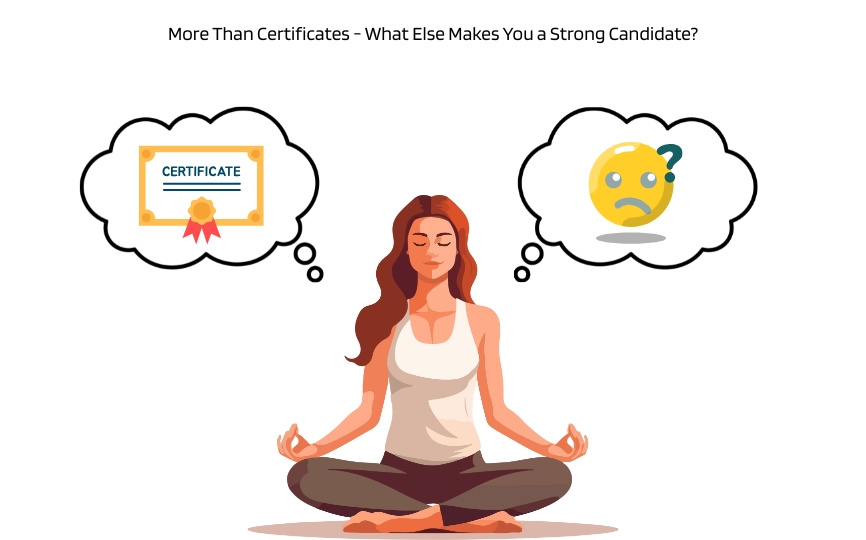
Being a qualified yoga instructor isn’t just about having the right yoga certificates. There’s more to it, like things you can’t always measure on paper. Soft skills like kindness, patience, and good communication are just as important as knowing your poses. These are the qualities that help you build trust, keep students safe, and create a welcoming space for everyone.
What Soft Skills Matter Most?
- Listening – Having an understanding of what your students need and adjusting your teaching as per it is a great skill to develop.
- Empathy – Being gentle and supportive, especially with beginners or those facing challenges, is called being empathetic towards your students.
- Confidence – Standing tall and leading a class with calm energy is confidence. This helps you be in touch with your students beautifully.
- Flexibility – It’s not just physically, but being open to feedback and new ideas mentally is a way of being adaptive towards your students’ point of view as well.
- Patience – It’s important to have a knowing that everyone learns at their own pace, and holding space for them is the key.
Bonus Point – A certificate can teach you the “how,” but these skills teach you the “why.” They turn good teachers into great ones. Remember, it’s not just about what you know, it’s about who you are as a teacher.
Real vs “Quick Fix” Qualifications
In today’s world, you can sign up for almost anything online, including yoga teacher training. But not all trainings are created in the right way. Some are full of detailed learning, real feedback, and strong support. Others? Well, they are just a bunch of videos, no practice, and a certificate you can print at home.
Be careful of “quick fix” programs that promise a teaching certificate in just a weekend or don’t ask you to teach at all. These might seem fast and easy, but they won’t prepare you to guide real people, and most studios won’t take them seriously.
Red Flags to Watch For –
- No live classes or teachers’ interaction
- Super low prices that seem too good to be true
- No practice teaching or students’ feedback
- No reviews or details about the yoga trainers
- Not registered with any known yoga organization (like Yoga Alliance)
Global Recognition – Will Your Qualification Work Anywhere?
Are you dreaming of teaching yoga on a beach in Bali or at a retreat in the Alps? You’re not alone. Many yoga teachers want to travel and share their practice around the world. But not every country sees yoga qualifications in the same way.
Some countries have specific expectations for the qualifications of yoga instructor certification, especially if you’re planning to work in wellness resorts.
What You Should Know –
- Your 200-hour YTT certificate is accepted in many countries, but not all.
- Some places may ask for Yoga Alliance registration or proof of teaching experience as well.
- Some language skills or basic CPR certification may also be required in specific yoga jobs.
- If you’re working at a tourist-focused retreat, they may prefer teachers with global credentials or prior international experience.
Pro Tip – Before applying for a job abroad, check the yoga studio’s or country’s guidelines for teaching yoga. You can ask what qualifications they expect and if your certificate will be enough. It’s better to know in advance than to be surprised later!
Final Words
So, what truly makes someone a qualified yoga instructor?
Yes, the certificates matter. The training hours matter. The teaching tools and safety knowledge? Very important. But more than all the checklists, the real qualification is something more than your commitment! It’s your willingness to keep learning. Your passion for sharing yoga with others and your ability to show up, even when you feel nervous or unsure.
Technical qualifications open the door, but it’s your love for the practice that keeps you walking through it. If you’re teaching in a quiet studio, a buzzing retreat, or your living room with all your heart, then you’re already on the right path.
You don’t need to be perfect. You just need to be present.