

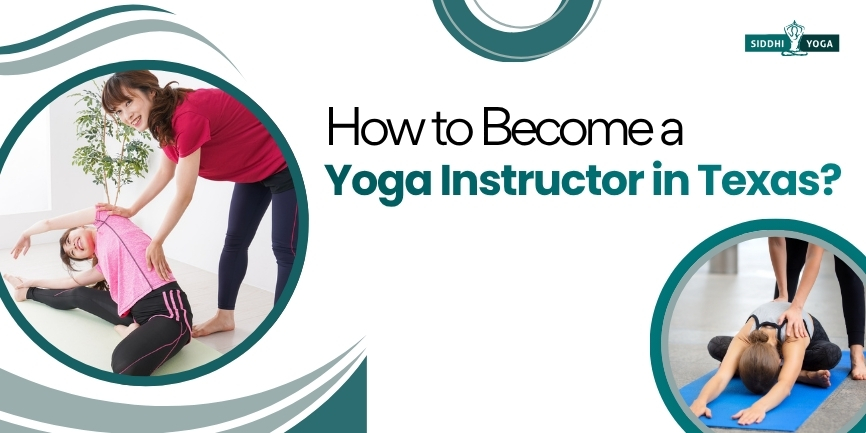
Have you been thinking about – how to get certified to teach yoga in Texas? Well, maybe yoga has already changed your life, and now you’re ready to share that gift with others. Or maybe you simply love guiding people and want to mix your passion with a purpose.
How to Become a Yoga Instructor in Texas?
If you’re living in Texas, or planning to move here, you’re in luck! The Lone Star State isn’t just known for barbecue, rodeos, and big skies. It’s also becoming a hot spot for yoga. From Austin’s buzzing wellness scene to the laid-back vibes in San Antonio and the soulful communities in Houston and Dallas, yoga is alive and growing. And that means plenty of room for new teachers!
But how do you actually become a yoga instructor in Texas? Let’s explore step by step!
Step 1: Understanding Yoga Teacher Training (YTT)

Before you start teaching others, you’ll need to know how to become a certified yoga instructor in Texas—better known as YTT. Think of it as the “college” for yoga teachers.
Here’s a small breakdown –
- 200-Hour YTT – This is your starting point. You’ll learn yoga asanas, yoga anatomy, teaching techniques, yoga philosophy, meditation techniques, pranayama, and the basics of running a class. Once you complete this, you can officially start teaching with a holistic approach.
- 300-Hour YTT – If you already have your 200-hour certification and want to take it further, this is your next step. It’s a deeper move forward into advanced teaching skills, philosophy, and the chakra system.
- Specialty Trainings – Some Texas studios also offer focused programs like Hot Yoga, Yin Yoga, Restorative Yoga, or even Trauma-Informed Yoga. These help you decide your own niche.
You can think of Yoga Teacher Training as not just training, but a personal journey! Many people say they get into the field for learning to teach professionally, but come out as their transformed selves!
Step 2: Finding the Right Yoga School in Texas
The cool thing about Texas is that no matter where you live, there’s a solid yoga school nearby. Let’s see some popular options –
- Austin
- My Vinyasa Practice – It’s known for flexible courses and strong community support.
- Black Swan Yoga – This is affordable and inclusive, perfect if you want to have your own practice in a fun and community-driven inclusive environment.
- Houston
- The Ranch Houston – It focuses on soulful training with specialties like Yin and Restorative.
- Mobile Om – This is a hybrid option which is partly in-person and partly online. It’s great if you need flexibility!
- Dallas / Fort Worth
- Gaia Flow Yoga – It offers weekend-friendly programs which are best if you’re working full-time.
- Sunstone Academy – This combines in-person and online learning by giving you both structure and freedom.
- San Antonio
- House of RhythOM – It’s known for smaller and more personal training sessions.
- Bloom Yoga – They focus on inclusive and healing-based yoga practices.
Each school has its own vibe. Some feel more spiritual, while others are more into fitness and technique. You can visit their websites, talk to past students, and also drop into a class before committing.
Step 3: Getting Certified
Texas doesn’t have a state-issued license for yoga teachers. Instead, most studios and gyms look for certifications recognized by Yoga Alliance.
Here’s what that looks like –
- RYT 200 (Registered Yoga Teacher, 200 hours) – You’ll earn this after completing a 200-hour YTT at a Yoga Alliance Registered Yoga School (RYS).
- RYT 500 (Registered Yoga Teacher, 500 hours) – This can be earned by combining 200- and 300-hour programs. It’s a signal of advanced training.
- CPR Certification – Many studios in Texas will also ask you for CPR training which is a safety thing!
- Continuing Education – To stay registered, Yoga Alliance asks for ongoing training after every three years.
Basically, you can think of certification as an official “green light” to start your teaching experience.
Step 4: Choosing the Program That Fits You

Not all training programs will fit your lifestyle or goals. When choosing, you can ask yourself questions like :
- Where do I want to train?
Do you want the buzz of Austin, or something calmer in San Antonio? Location matters a lot more than you can imagine! - What style speaks to me?
If you love sweaty, challenging body flows, you can look into Vinyasa or Hot Yoga. If you’re drawn to calm and stillness, Yin or Restorative can be your path. - How much time do I have?
Some programs are intensive like full-time for a month, while others run on weekends to fit around work.
- Who are the teachers?
A great mentor or lead trainer can change your entire journey so you should do some research on who’s leading the training. - What’s the community like?
Yoga Teacher Training is easier when you’re surrounded by supportive and like-minded people, so it’s better to choose a healthy community!
Choosing your program isn’t just about convenience; it’s about where you’ll experience personal growth the most and expand your yoga art as well!
Step 5: Starting Your Teaching Journey in Texas
Okay—you’ve finished training. Now what? Texas has plenty of doors waiting to open. Here are some ways new teachers usually start and you can too!
- Studio Jobs – You can start applying to yoga studios in your city. Most are open to fresh graduates, especially if you’ve trained locally.
- Gyms & Fitness Centers – There are places like YMCA or local gyms that often want yoga instructors with great confidence for group classes.
- Community Classes – You can also teach at parks, recreation centers, and libraries, as these are great spots to start.
- Private Lessons – It’s the best way to work one-on-one with students looking for personal guidance, like hands-on adjustments and a strong foundation.
- Workshops & Retreats – Once you’ve got some expertise, you can host your own sessions like leading a retreat in Texas Hill Country or more!
- Go Digital – By offering online classes, you can reach students beyond your town or even outside Texas!
Teaching in Texas can be as flexible as you want it to be. Some instructors teach part-time alongside their other jobs, while others build a full-time yoga teacher career!
Step 6: Business & Legal Essentials
Here’s the part nobody tells you about teaching yoga – It’s also like running a small business. Don’t worry, it’s not as scary as it sounds! Here’s how –
- Business Structure – You can decide if you’ll be a sole proprietor (simple) or form an LLC (gives you more protection).
- Insurance – A liability insurance is a must, as it keeps you covered in case of accidents.
- Taxes – If you’re freelancing as a yoga teacher, keeping track of income and expenses is important. Your structured tax record will help you and you’ll thank yourself during tax season.
- Marketing – Spreading the word!
- Start with spreading the word on social media like Instagram and Facebook as they are big in the yoga community.
- You can develop a simple website with your schedule and story.
- You can also network, attend classes, events, and workshops in your area.
Running the business side properly means you can focus more on teaching and less on stress!
Step 7: Resources for Your Texas Yoga Journey
- Yoga Alliance – You can visit the Yoga Alliance website as it’s a go-to for certification information and resources.
- Texas Yoga Association – Such associations are also great for networking and finding local events.
- Yoga Books – Some good, meaningful books of yoga can be helpful to deepen knowledge and awareness. A few of them are –
- The Heart of Yoga by T.K.V. Desikachar
- Light on Yoga by B.K.S. Iyengar
- Teaching Yoga by Mark Stephens
FAQs
Before you open your yoga mat and step into a yoga teacher training program, it’s natural to have a lot of questions. From costs to certifications, here are the answers to the most common things future yoga teachers in Texas want to know.
1. What are the requirements to become a yoga instructor in Texas?
Texas doesn’t have a state license for yoga teachers. Instead, most studios expect you to complete a 200-hour Yoga Teacher Training (YTT) from a school registered with Yoga Alliance. You may need CPR certification and liability insurance once you start teaching.
2. What do studios look for when hiring yoga instructors?
Yoga studios in Texas usually look for a Yoga Alliance certification (RYT-200 at minimum).
3. How many hours are needed for accreditation?
200 hours – The basic level to start teaching.
300 hours – Advanced training which can be taken after your 200 hours.
500 hours total – It’s a combination of both 200-hour and 300-hour yoga teacher training, showing the highest level of training recognition with Yoga Alliance.
4. Can I become a certified yoga teacher online?
Yes! Since 2020, many Texas yoga schools offer online YTT programs that are recognized by Yoga Alliance. Just make sure the school is a Registered Yoga School (RYS), otherwise, your certificate may not count toward RYT registration.
5. What should I look for in online training?
When choosing an online YTT, you can check for accreditation with Yoga Alliance, live interaction with educators (not just pre-recorded videos), flexible schedules that fit your yogic lifestyle, and a supportive community where many programs have group chats, forums, or Zoom circles.
6. How long is a Yoga Teacher Training duration?
It depends on the program format –
Intensive (4–6 weeks full-time) , if it’s a daily training format, like yoga “boot camp.”
Part-time (3–6 months), if it’s a weekend or evening classes.
Hybrid, this is a mix of online and in-person classes spread over several months.
7. Will my certification expire?
No! Once you’ve completed your YTT, your certificate itself never expires. However, if you register with Yoga Alliance, you’ll need to keep your RYT status active by logging continuing education hours (75 hours every 3 years).
8. Do I need insurance to teach yoga?
Yes. Most studios require yoga instructors to carry liability insurance. If you’re teaching independently in parks, gyms, or online, it’s even more important. Insurance protects you legally if an injury or accident happens during your class.
9. What’s the cost of a YTT in Texas?
It widely depends on the school, style, and format –
200-hour YTT – $2,000 – $3,500 ( an average range in Texas).
300-hour YTT – $3,000 – $5,000.
Online programs – These are often more affordable starting at around $1,000.
Many schools offer early bird discounts, payment plans, or scholarships, so always ask before you start!
Final Thoughts
How to be a yoga instructor in Texas isn’t just about getting certified. It’s also about finding your voice, sharing your personal practice of yoga, and building connections in a state that has endless opportunities.
If you’re interested in becoming a yoga instructor in Texas, you’ll study the history of yoga, learn how to maintain physical health through proper postures, and dive into the physiology aspects that support safe and mindful teaching.
Remember Texas is big, bold, and full of people ready to step onto their mats! Maybe your class is the one they’ve been waiting for. So open your mat, take that first step, and begin your profound journey. The Lone Star State is ready for you!