

Yoga has become more than just a wellness trend — it’s a way of life for millions. With this growing popularity, more and more people are thinking about becoming yoga instructors. Maybe you’ve been practicing for years, love guiding others, and feel inspired to teach. But then comes the big question: Can you teach yoga without certification?
This question comes up often for passionate practitioners who aren’t sure whether a formal yoga teacher training program is necessary. Maybe you’re wondering if experience is enough or if informal teaching is allowed. This blog explores the practical side of yoga teaching — what’s legally required, what studios expect, and what your options are for yoga certifications.
Can You Teach Yoga Without Certification?

Let’s start with a clear and honest answer: Yes, you can teach yoga without a certification — but that comes with its own set of risks.
In the yoga teaching profession, “certification” typically refers to completing a 200-hour yoga teacher training (YTT) program, often recognized by organizations like Yoga Alliance. This training covers anatomy, philosophy, teaching methodology, and practice teaching. While it adds credibility and depth to your skills, it’s not legally required in many countries.
Legal Perspective: Is Yoga Certification Legally Required?
One of the most important things to understand is that yoga is not a government-regulated profession in most countries. That means there’s no official license required to call yourself a yoga teacher or to begin offering classes.
However, yoga studios and fitness centers often have their own standards, and they usually require some form of certification, especially a 200-hour YTT from a registered school.
Organizations like Yoga Alliance are not legal bodies, but they help set industry standards. Many studios prefer or require registered yoga teachers to be listed in their registry for professional credibility and insurance reasons.
So while you can teach yoga without a certification, it may limit your opportunities, especially in formal settings.
That said, the context matters. Teaching informally to a small group of friends is very different from applying for a job at a high-end yoga studio. So, the answer depends on what kind of teaching you plan to do.
Studio and Employer Requirements
Studios prefer certified and trained staff. The onus of the good yoga training of its customers lies on their able shoulders, so they always prefer trained yoga professionals. A few other reasons for the same are:
- Liability insurance: Studios often need certified teachers to qualify for insurance coverage.
- Student safety: They want to ensure teachers understand anatomy, adjustments, and class structure, essentially for student safety.
- Consistency: Certification shows a consistent and standard level of practice, training, and professionalism.
- Lower Training Costs: Yoga studios have to spend less time and money to train you if you have a formal YTT education.
- Latest Trends: If you are certified, you will be aware of the latest trends in the yoga industry and would make your teaching more effective and relevant.
Who Hires Non-Certified Yoga Teachers?
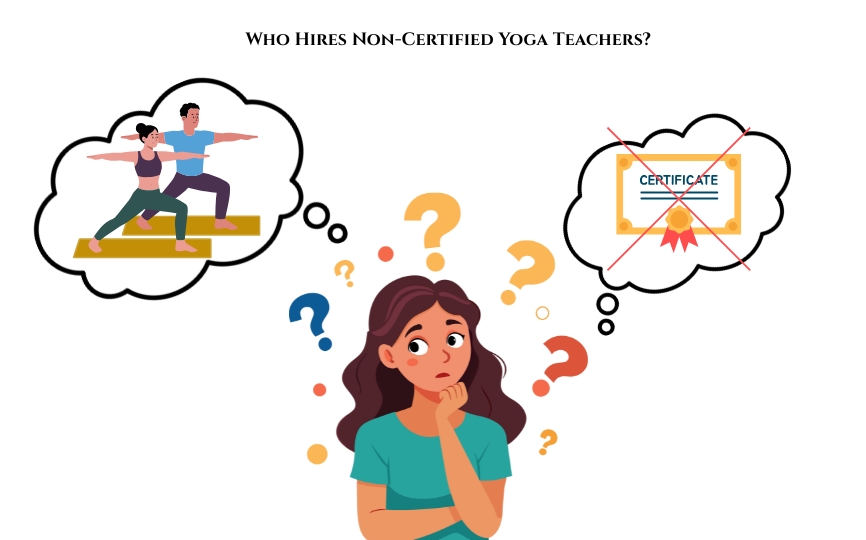
Let’s find out who can accept non-certified teachers.
- Private sessions with friends or family: If people trust you, informal teaching is fine. You can conduct private yoga sessions for your friends and family for them to get the maximum benefit of your prolonged yoga practice.
- Online teaching or social media: Teaching with this medium is possible for you, even if you are not certified. Many influencers and content creators share yoga videos online without formal credentials. However, caution is important — you’re still responsible for guiding people safely.
- Donation-based or community classes: Sometimes this is also possible, especially in informal settings like parks or local groups.
So, if you want to know can you teach yoga without a certification, the answer would depend on the setting you choose to teach. In certain spaces, the answer is yes, but you must proceed with mindfulness and responsibility.
Teaching Without Certification: Pros and Cons
Let’s take a practical look at the benefits and drawbacks of going the non-certified route, for you to make the best possible decision.
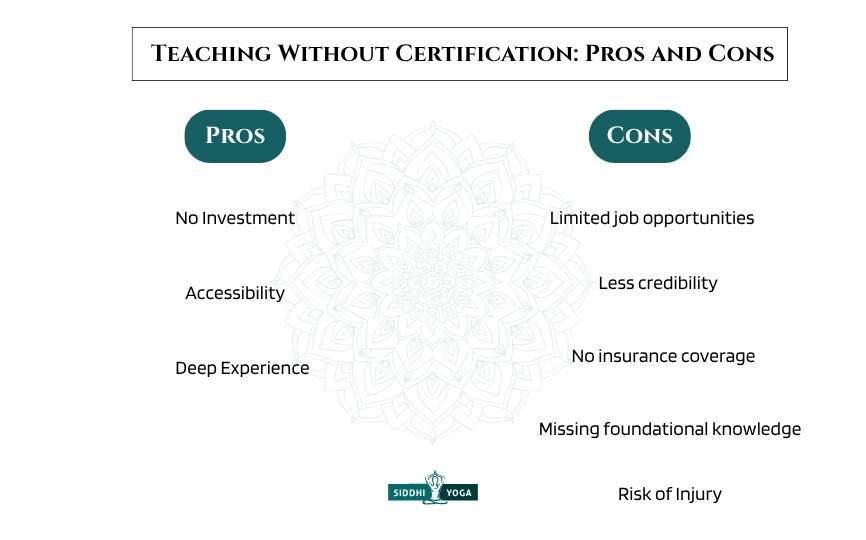
Pros:
- No Investment: You don’t need to invest time and money in a formal course. You can start taking yoga classes right now based on your yoga practice.
- Accessibility: This option works great for people in remote areas or with financial constraints.
- Deep Experience: If you are willing to teach without certification, that means you might have a deep experience to share with the world. In that case, you can take the risk of teaching informally.
Cons:
- Limited job opportunities: If you want to make a professional career and look for a job at studios, gyms, and retreats, it’s better to become a certified yoga teacher.
- Less credibility: Formal or professional set-ups first look for credibility while hiring yoga teachers. In a world where fraud is common, nobody will hire you on the basis of your practice alone.
- No insurance coverage: The liability of teaching properly to all students lies with you. So, it becomes risky if someone gets injured, as there would be no insurance coverage available.
- Missing foundational knowledge: Certified yoga instructors are polished with the confidence they get from the teacher training course. Their knowledge about anatomy, teaching methods, yoga history, and other subjects is visible from the clear instructions they give to the students.
- Risk of Injury: If you haven’t got any formal yoga training, you might not be aware of the modifications of the asanas and alignment cues. As an uncertified teacher, you might have to face legal action if someone is injured during your class.
- No Registration on Platforms: You are not eligible to register yourself on the formal platforms like ClassPass, Mindbody, or Yoga Alliance if you haven’t completed a registered yoga teacher training. Eventually, you might miss many opportunities.
How to Become a Yoga Teacher (If You Choose to Get Certified)
If you decide to get certified, read about the steps you have to take to get a certification.
- First, choose a 200-hour yoga teacher training (YTT) program. This is the standard across the yoga industry.
- Prefer a Registered Yoga School or a Yoga Alliance-accredited program if you want to teach in studios or in formal settings.
- Choose a training that is aligned with your favorite style of yoga, like Vinyasa, Hatha, Yin, etc.
- You can opt to do your training online or in person. You can choose institutes like Siddhi Yoga, which provide authentic yoga teacher training virtually. There is no convenience better than training without disturbing your existing routine!
- Ultimately, choose a yoga teacher training program that is practical for your age, stage, budget, and lifestyle. Many institutes provide online or in-person, full-time or weekend programs. So, choose wisely!
Once you complete your YTT, you’ll have the tools and confidence to teach safe and meaningful classes, and more opportunities will open up.
The Bottom Line
Can you teach yoga without certification? Yes, in certain situations, but it comes with its own risks and limitations.
If you want to teach professionally, work in studios, or grow a yoga career, certification is often necessary. It builds your confidence, ensures student safety, and opens doors to more opportunities.
If you just want to share your yogic experience informally, that’s okay too—but keep learning, stay humble, and be mindful of your responsibilities.
Whether certified or not, yoga teaching is about connection, awareness, responsibility, and care. Choose the path that suits your goals, stay updated, and always lead from the heart!